
The Saltwater Magazine for Gulf Coast Fishing!
FISHING FORECASTS | FISHING CALENDARS | ARTICLES | ADVERTISE | SUBSCRIBE
Search Gulf Coast Fisherman's
Web Site
Past articles, specific
places or fish, etc.

the Lure of the Lump
by Al Rogers
(Extra from the Winter 2008 Issue)
Also known as Tuna Mountain, the Midnight
Lump is
no place for inexperienced anglers.
- IMMINENT DANGERS
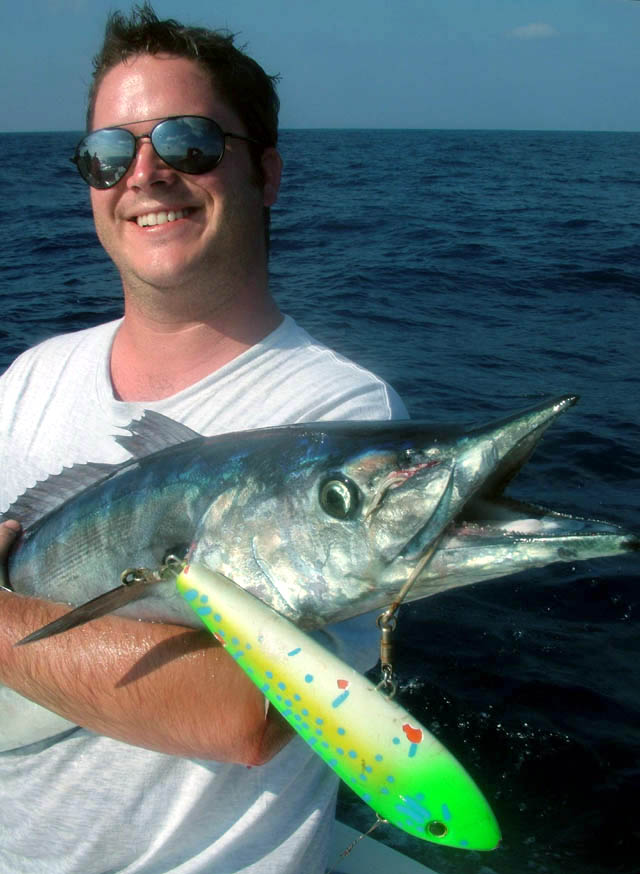
- Capt. Mike Frenette, who has been making regular trips here since the early 1980s, is one veteran angler who is acutely aware of the potential dangers one may encounter at the Midnight Lump.
- "There are some absolutely incredible fishing opportunities out there," said Frenette, owner and operator of the Venice-based Teaser Fishing Team. "Knowing the weather and the seas is vital. People have to know exactly what they're up against."
- One of the most critical things that anglers in the lower Mississippi Delta will face in winter is fog. Fog typically prevails from December to March, which is coincidentally peak season on the Midnight Lump. The next most important consideration, Frenette said, is hypothermia. Third, he said, are the extreme currents and sea conditions just off the mouth of the Mississippi River.
- IMMINENT DANGERS
- "There are some absolutely incredible fishing opportunities out
there," said Frenette, owner and operator of the Venice-based Teaser
Fishing Team. "Knowing the weather and the seas is vital. People have
to know exactly what they're up against."
- One of the most critical things that anglers in the lower Mississippi Delta will face in winter is fog. Fog typically prevails from December to March, which is coincidentally peak season on the Midnight Lump. The next most important consideration, Frenette said, is hypothermia. Third, he said, are the extreme currents and sea conditions just off the mouth of the Mississippi River.
- Dense fog is prevalent across south Louisiana, but particularly near water during winter warm ups and spring thaws. Some anglers and hunters who target the lower Mississippi Delta say this region is especially conducive for this dangerously blinding mist. With a subtropical climate, air temperatures in the 70s often converge with extremely cold water in the Mississippi River. The result is fog, which can wreak havoc for commercial and recreational marine traffic.
- Generally, fog will lift by mid-morning. But veterans have seen some mornings when the fog has remained for days, keeping most vessels in harbor. This is when radar is crucial. Recreational fishing vessels without it are advised not to follow another boat that is radar equipped. With sudden stops, this can be a potential for disaster.
- Meanwhile, hypothermia, defined by a drop in the body's core temperature, is another dangerous element. Cold, wind and water are the three major contributing factors to hypothermia. And many going offshore in peak Lump season may be subjected to all three. Dressing warmly, layering clothing, with a waterproof jacket or covering is an absolute necessity. Anyone bound for the Midnight Lump should also bring a change of dry clothing sealed in a waterproof plastic bag.
- Yet another unforeseen danger that offshore anglers may face is extreme currents and sea conditions. While anglers are urged to check marine weather reports, some headed to the Lump have found that conditions are often much rougher than those forecasted. The Mississippi River, which drains nearly two-thirds of the continental United States, is an awesome force. And nowhere is this more apparent than off the major passes in southeast Louisiana.
- "You really have to be aware of what's not in the forecast," Frenette said. "Once you get around the Southwest Pass area and beyond, the seas have a tendency to be a lot rougher than what they predict."
- When river stages are high, the flow is incredible. Literally billions of gallons of muddy water exit the passes at an alarming rate. This flow, coupled with intense west-to-east Gulf currents creates wicked waves, bow-busting cross-chops that make a journey uncomfortable, at best. When these current-driven conditions are combined with winds from any westward direction, such as southwest or northwest, the size of the waves will increase dramatically.
- "It's been my experience that in these conditions, you're not going to get through here very easily," Frenette said. "For instance, you can't cut around West Delta and get near the 7-mile rigs. The seas may all of a sudden be seven to eight feet."
- Many veterans like Frenette say that that it is virtually impossible to get a true forecast for seas in the Southwest Pass area.
- Whatever is forecasted - it's going to be worse, " Frenette warns.
- Because of these conditions, even the most experienced anglers are caught off guard.